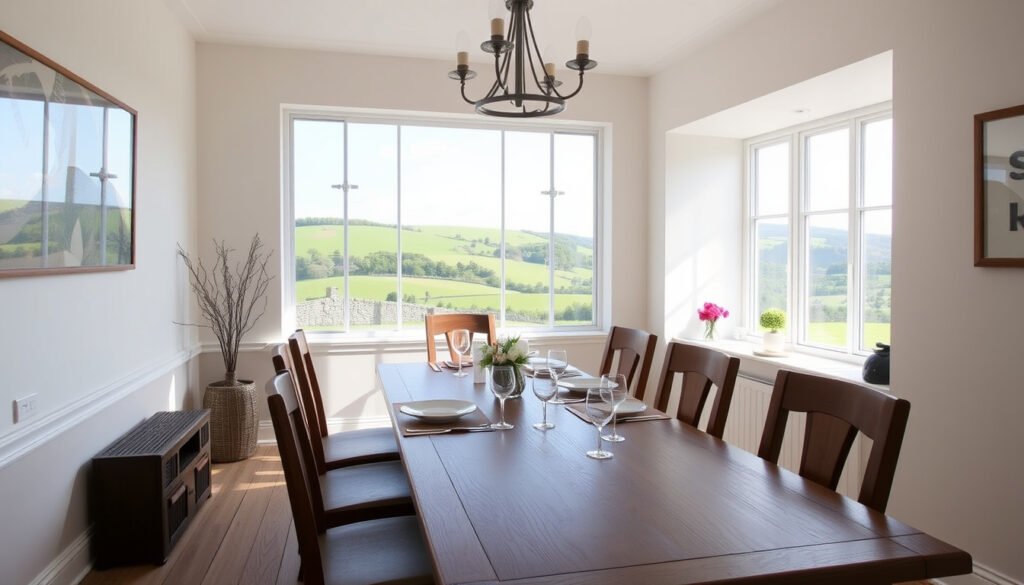
Dining Tables: Complete Buyer’s Guide for Ireland (2025)
Finding a dining table that fits your home and your lifestyle can feel like a puzzle – especially in Irish homes where space is often at a premium. Whether you’re furnishing a compact Dublin apartment or a spacious family kitchen in Cork, the right table makes all the difference. The advice below will help you navigate the options, from shape and size to materials and local retailers, so you can make a choice you’ll be happy with for years.
Average Price Range: €200 – €1,500 · Most Popular Material: Solid Wood · Common Seat Capacity: 4–8 persons · Standard Height: 28–30 inches (71–76 cm) · Top Shape: Rectangle
Quick snapshot
- Standard dining table height is 28–30 inches (71–76 cm) – Mathis Home (furniture size guide)
- Most common material is wood – JYSK Ireland (Irish furniture retailer)
- A 6-foot rectangular table seats 6 people comfortably – Mathis Home (furniture size guide)
- Best brand for durability – varies by user reviews
- Exact price range depends on retailer and material
- Optimal table thickness for stability – depends on material
- Online retailers in Ireland are expanding free delivery and assembly options
- Extendable tables are increasingly popular for flexible hosting – JYSK Ireland (Irish furniture retailer)
- BoConcept recommends extendable designs for space-saving everyday footprint – BoConcept (design furniture specialist)
- Look for sustainably sourced materials with certifications like PEFC – Grain & Frame (furniture buying guide)
Six key dimensions that define the dining table market in Ireland – notice how the standard height and average length for a 6-seater are nearly universal across retailers.
| Attribute | Value |
|---|---|
| Standard Height | 28–30 inches (71–76 cm) |
| Common Width | 36–42 inches (91–107 cm) |
| Average Length for 6-Seater | 60–72 inches (152–183 cm) |
| Minimum Room Size for 6-Seater | 10×12 feet (3×3.7 m) |
| Most Popular Shape in Ireland | Rectangle |
| Top Material | Solid wood (oak, walnut) |
What are the different types of dining tables?
Round dining tables
- Ideal for small spaces and encourage conversation – JYSK Ireland (Irish furniture retailer)
- Typically seat 4–6 people depending on diameter
Rectangular dining tables
- Most common shape; fit well in long rooms – JYSK Ireland (Irish furniture retailer)
- Seats 6–10 people comfortably
Extendable dining tables
- Offer flexible seating capacity for hosting – BoConcept (design furniture specialist)
- Available in many styles and materials
Pedestal vs leg tables
- Pedestal bases reduce knee collisions and maximise seating on small tables – BoConcept (design furniture specialist)
- Four-leg tables offer more stability on uneven floors
The implication: match your shape to your room’s proportions and your typical number of diners.
How do I choose the right size dining table?
Measuring your dining room
- Allow at least 36 inches of clearance on all sides for chairs and movement – Mathis Home (furniture size guide)
- Grain & Frame recommends 42 to 48 inches between table and walls – Grain & Frame (furniture buying guide)
Seating capacity guidelines
- Each person needs about 2 feet of eating space – Grain & Frame (furniture buying guide)
- A 6-foot table typically seats 6 people – Mathis Home (furniture size guide)
- Chairs add 16–20 inches when pushed in and up to 36 inches when fully pulled out – Mathis Home (furniture size guide)
Clearance space requirements
- Subtract 3–4 feet from each room dimension to avoid a cramped dining area – BoConcept (design furniture specialist)
- Square and round tabletops suit square rooms; rectangular tables fit long rooms – BoConcept (design furniture specialist)
Standard 6-person rectangular: 72”×36” · Standard 6-person round: 48–54” diameter · Minimum room: 10′×12′
A table that fits the room dimensions may still feel tight if you don’t account for chair pull-out. The clearance rule is your most important measurement.
The pattern: careful measurement is the foundation of a successful dining table purchase.
What materials are best for dining tables?
Solid wood: oak, walnut, pine
- Durable and can be refinished – JYSK Ireland (Irish furniture retailer)
- Oak and marble add timeless elegance – JYSK Ireland (Irish furniture retailer)
- Look for PEFC-certified wood for sustainable sourcing – Grain & Frame (furniture buying guide)
Glass and metal
- Easy to clean but show fingerprints and can scratch – JYSK Ireland (Irish furniture retailer)
- Tempered glass is recommended for durability – BoConcept (design furniture specialist)
Laminate and veneer
- Budget-friendly but less durable than solid wood – JYSK Ireland (Irish furniture retailer)
- Lighter finishes like white or natural wood create an airy feel – JYSK Ireland (Irish furniture retailer)
The trade-off: higher upfront cost for solid wood pays off in longevity and repairability.
Where can I buy dining tables in Ireland?
Online retailers in Ireland
- JYSK Ireland offers a wide selection of dining tables with free delivery on many items – JYSK Ireland (Irish furniture retailer)
Physical stores in Dublin and beyond
- Dublin has a high concentration of furniture showrooms – you can see and feel tables before buying
Delivery and assembly options
- Verify whether the supplier can source both tabletop and legs if buying separately – Grain & Frame (furniture buying guide)
- Some online retailers offer assembly as an add-on service
Delivery times can vary widely – a table that shows “in stock” may still take 2–3 weeks. Always confirm before ordering if you need it by a certain date.
The implication: a mix of online research and in-person inspection gives you the best outcome.
How to maintain your dining table?
Daily cleaning tips
- Use coasters and placemats to prevent heat and moisture damage – JYSK Ireland (Irish furniture retailer)
- Glass and laminate surfaces are easy to clean with a damp cloth – JYSK Ireland (Irish furniture retailer)
Protecting the surface
- Use a tablecloth or placemats for everyday protection
- Avoid harsh chemicals on painted or lacquered surfaces
Refinishing wood tables
- Solid wood tables can be sanded and refinished if scratched or worn – BoConcept (design furniture specialist)
- Maintaining your dining table is just as important as maintaining your range hood – both see heavy use in the kitchen area.
The takeaway: choose maintenance habits that match your material and usage pattern.
Three common table shapes, one clear trade-off: each shape excels in a different room layout.
| Shape | Best for | Seating | Space efficiency |
|---|---|---|---|
| Round | Small rooms, conversation | 4–6 | High – no corners |
| Rectangular | Long rooms, formal dining | 6–10 | Moderate – requires width |
| Extendable | Flexible hosting, small spaces | 4–8 (extended to 8–12) | Depends on base size |
Seven specs that separate a good dining table from one that’ll cause regrets.
| Specification | Typical value |
|---|---|
| Standard Height | 28–30 inches (71–76 cm) |
| Typical Width | 36–42 inches (91–107 cm) |
| 6-Seater Length | 60–72 inches (152–183 cm) |
| 8-Seater Length | 78–96 inches (198–244 cm) |
| Clearance per side | 36 inches minimum |
| Chair space per person | 24 inches |
| Table thickness | 0.75–1.5 inches (common for solid wood) |
Upsides of solid wood tables
- Durable and can be refinished multiple times
- Timeless aesthetic that fits any decor
- Often PEFC-certified for sustainable sourcing
Downsides of solid wood tables
- Heavy and difficult to move
- Susceptible to water rings and dents
- Higher upfront cost compared to laminate
Confirmed facts
- Standard dining table height is 28–30 inches (71–76 cm) – Mathis Home
- Most common material is wood – JYSK Ireland
- A 6-foot rectangular table seats 6 people comfortably – Mathis Home
What remains unclear
- Best brand for durability – varies by user reviews
- Exact price range depends on retailer and material
- Optimal table thickness for stability – depends on material
- Whether extendable mechanisms hold up over a decade of use
“Allow at least 36 inches of clearance on all sides of a dining table.”
— Mathis Home (furniture size guide)
“Pedestal bases maximize seating on small tables and reduce knee collisions with legs.”
— BoConcept (design furniture specialist)
“A small round dining table is ideal for cosy spaces and intimate gatherings.”
— JYSK Ireland (Irish furniture retailer)
For Irish shoppers looking to balance space, budget, and durability, the choice often comes down to solid wood extendable tables from local retailers. The smartest move is to measure your room carefully, test the clearance, and buy from a store with free delivery. Otherwise, you might end up with a table that fits the room but not your daily life. A dining table can also serve as a meaningful anniversary gift – check our guide to anniversary gifts by year for ideas if you’re buying for a milestone occasion.
tableschairs.co.uk, italianfurnitureireland.wordpress.com, pouffelove.ie, lamonluther.com, relaxhouse.com.au, youtube.com, murphyfurniture.ie, bassettfurniture.com
For a more detailed overview of styles and retailers, refer to this complete buying guide for dining tables in Ireland.
Frequently asked questions
What is the best wood for a dining table?
Oak and walnut are considered top choices for their durability and grain patterns. Pine is more affordable but softer.
Can I use a dining table as a desk?
Yes – many modern tables double as work desks. Look for a height of 28–30 inches and a durable top like ceramic or solid wood.
How to measure for a dining table?
Measure the room length and width, then subtract 3–4 feet on each side for clearance. The remaining area is your maximum table size.
Are extendable tables sturdy?
High-quality extendable tables use metal slides or butterfly leaf systems and are stable when extended. Always check the mechanism before buying.
What is the difference between a dining table and a kitchen table?
Dining tables are typically larger, more formal, and sit higher. Kitchen tables are usually smaller, often with shorter legs, and used for daily meals.
How to protect a dining table from heat?
Use coasters, placemats, or a heat-resistant pad. Never place hot pots directly on wood or laminate.
Should I buy a table and chairs set separately?
Buying together ensures matching style and height. Separate purchases offer more choice but require careful measurement of chair seat height vs table apron.
What size rug should I use under a dining table?
The rug should extend at least 24 inches beyond the table on all sides so chairs stay on the rug when pulled out.
More related posts
 What Is a Femboy? Definition, Identity, and Examples
 Cale Ambrozic: Actor, Finding Her Edge, We Were Liars, Bio
 Cast of Hamilton 2020 Disney+ Cast: Original Broadway Stars
 Air Canada Flight Tracker: Live Status & Maps
 Does McDavid Have a Twin Brother? Connor’s Family Facts
 Jujutsu Kaisen Season 3 & 4: Release, Age Rating, Gojo Sealing
 Gasoline Station Near Me: Ireland’s Best Petrol Options
 Joe Jonas: Divorce Timeline and Custody Details
