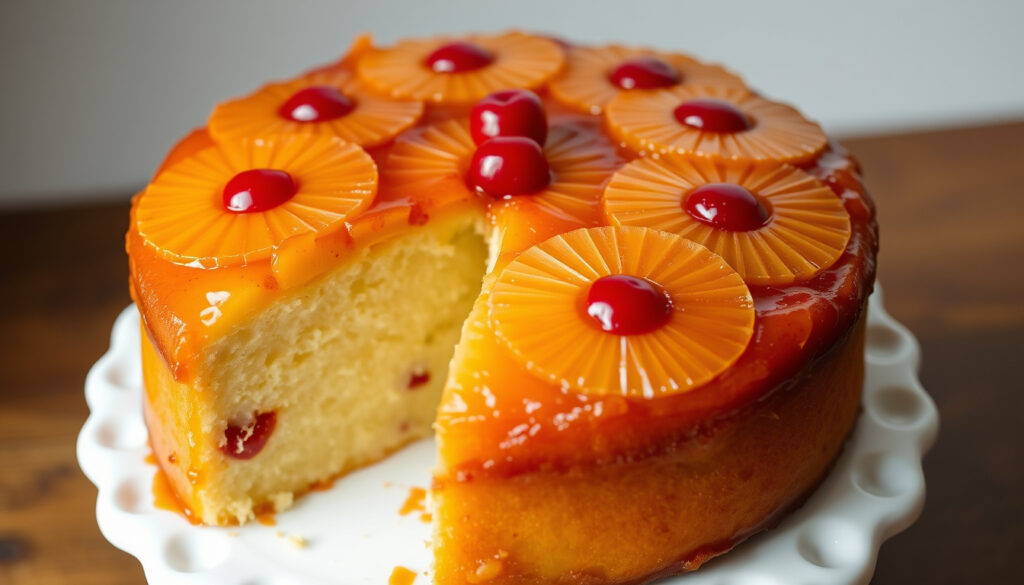
Pineapple Upside Down Cake Recipe: Mary Berry & Jamie
Pineapple upside down cake wins dinner parties with its caramel-glazed crown of glossy rings and glinting cherries—a mid-century classic that Mary Berry and Jamie Oliver have revived for modern kitchens. From Berry’s foolproof British sponge to Oliver’s tropical coconut twist, the format proves its staying power through sheer visual drama and comforting flavor.
Classic Topping: Caramelized pineapple rings and cherries · Key Ingredient: Canned pineapple slices · Pan Size: 9-inch round · Prep Time: 15-20 minutes · Bake Time: 30-40 minutes
Quick snapshot
- Both recipes use tinned pineapple rings and glacé cherries as signature elements (Jamie Oliver Official)
- Mary Berry inverts cake after 5 minutes rest for glistening topping (Mary Berry Cooks)
- The exact invention date of pineapple upside down cake as a formal recipe
- Whether alternative variations using fresh pineapple produce comparable caramelization
- Jamie Oliver Comfort Food recipe blogged October 2014 (Julia H Life)
- Pineapple upside-down cake described as retro decades old (Mary Berry Cooks)
- Step-by-step comparison of both methods to help you choose your approach
- Common pitfalls and how celebrity chef tips prevent them
The following specifications reflect verified measurements from primary and secondary sources.
| Label | Value |
|---|---|
| Signature Topping | Pineapple rings in brown sugar butter |
| Standard Yield | 8-12 servings |
| Bake Temp | 350°F (175°C) |
| Cool Time | 10 minutes in pan |
What is Pineapple Upside Down Cake?
Pineapple upside down cake is a classic baked dessert where fruit toppings—typically canned pineapple rings and glacé cherries—are arranged at the bottom of the pan before the batter is poured over and baked. Once finished, the cake is flipped out so the caramelized topping becomes the showstopping presentation on top.
Mary Berry describes her version as a “true classic” and “retro dessert” that remains just as comforting as it was decades ago. Jamie Oliver embraces “old-school flavour” by working with tinned fruit in a modern context, calling his recipe “a cracking upside-down cake” that delivers big on nostalgia.
“Mary Berry’s version is simple yet elegant—using the all-in-one method for a quick, foolproof batter and perfectly balanced sweetness.”
— Mary Berry Cooks recipe site
“A cracking upside-down cake. Embracing the beauty of tinned fruit, this version delivers big on old-school flavour.”
— Jamie Oliver, chef
History and origins
The technique of baking fruit upside-down first appeared in American cookbooks in the 1920s, with the pineapple version gaining widespread popularity after Dole pineapple company ran recipe contests in the 1940s and 1950s. British adaptations, particularly Mary Berry’s approach, emphasize a lighter sponge and tinned fruit packed in juice rather than syrup.
Key ingredients overview
Both Mary Berry and Jamie Oliver anchor their recipes on canned pineapple rings and glacé cherries as non-negotiable signature elements. Beyond that, their approaches diverge significantly—Mary opts for butter and brown sugar caramel, while Jamie reaches for runny honey as his caramelizing agent.
Old Fashioned Pineapple Upside Down Cake Recipe
Mary Berry’s recipe stands apart for its emphasis on simplicity and tradition. The all-in-one sponge method requires no creaming or complex technique, making it approachable for home bakers of any skill level.
The caramel topping starts with 50g butter and 50g light brown sugar melted together in a 9-inch round tin. Seven pineapple rings are laid flat across the caramel base, each centered with a glacé cherry. The batter—a straightforward mix of flour, baking powder, butter, sugar, eggs, milk, and pineapple juice—pours over everything before baking at 180°C (160°C fan)/350°F for 30-35 minutes.
The time from prep to plate totals 55 minutes, yielding 6 generous slices—ideal for afternoon tea or Sunday dessert.
Ingredients list
- 100g self-raising flour
- 100g butter, softened
- 100g caster sugar
- 2 eggs
- 2 tablespoons milk
- Pineapple juice from tin (approximately 3-4 tablespoons)
- 50g butter for topping
- 50g light brown sugar for topping
- 7 pineapple rings (canned in juice)
- 7 glacé cherries
Step-by-step instructions
- Preheat oven to 180°C (160°C fan)/350°F. Grease a 9-inch round tin with butter.
- Melt 50g butter with 50g light brown sugar in the tin over low heat until bubbling and golden. Remove from heat.
- Arrange 7 pineapple rings in the caramel, placing a glacé cherry in the center of each ring.
- Make the all-in-one batter: sift flour and baking powder into a bowl, add butter, sugar, eggs, milk, and pineapple juice. Beat together until smooth.
- Pour batter over the pineapple arrangement, spreading gently to cover.
- Bake for 30-35 minutes until risen and golden. A skewer inserted into the center should come out clean.
- Rest in the tin for 5 minutes before inverting onto a serving plate.
Mary Berry’s tips include using room-temperature ingredients, drying pineapple rings briefly on kitchen paper before arranging, and inverting the cake while still warm—this last point is critical for clean release.
Waiting too long before flipping causes the caramel to cool and harden, sticking to the tin instead of flowing down the cake’s surface for that signature glossy presentation.
Simple Pineapple Upside Down Cake
For those who want this retro classic without investing an afternoon in the kitchen, a simplified version using boxed cake mix delivers respectable results with a fraction of the effort. Betty Crocker and similar brands have long supported this shortcut in their recipe collections.
The trade-off is depth of flavour—the homemade sponge catches more caramel and holds moisture better than box mix, but the one-bowl simplicity and 15-minute prep time make this approach genuinely practical for last-minute occasions.
Quick prep tips
- Use a 9-inch round cake tin and generously grease with butter before adding the caramel layer
- Drain pineapple rings but reserve the juice—you’ll need it if your cake mix calls for liquid
- Press rings firmly into the caramel to ensure even contact
- Use maraschino cherries for brighter colour contrast if glacé cherries aren’t available
Minimal ingredient version
- 1 box yellow cake mix (or pineapple-flavoured)
- Pineapple juice as liquid per mix instructions
- 1 can pineapple rings
- Maraschino or glacé cherries
- 3 tablespoons butter
- 3 tablespoons brown sugar
Assemble by melting butter and sugar in the tin, arrange fruit, prepare cake mix according to package directions, and bake at 350°F for 25-30 minutes.
Best Ever Pineapple Upside Down Cake Recipe
Elevating this dish beyond the ordinary requires attention to caramel quality, batter richness, and timing precision. The difference between a good pineapple upside down cake and an exceptional one lives in the details.
Soft, buttery cake texture with caramelized edges where the fruit meets the tin creates the ideal contrast. The caramel should bubble evenly before baking so it coats every ring thoroughly, and the batter should be rich enough to hold its own against the sweetness on top.
Adding extra butter or using darker brown sugar increases flavour but can make the cake denser—Mary Berry’s balanced approach of 100g each of butter, sugar, and flour keeps the sponge light while delivering enough fat for moisture.
Pro tips for perfection
- Use dark brown sugar instead of light for deeper caramel notes
- Add a splash of vanilla extract to the batter for complexity
- Pat pineapple rings completely dry before arranging—moisture dilutes caramelization
- Don’t open the oven door during baking; temperature fluctuations cause uneven rise
- Cool in pan for exactly 5 minutes, no more, no less
Common mistakes to avoid
- Greasing insufficiently: Both recipes call for buttering the tin, but some bakers skip the sugar layer, causing sticking
- Overmixing batter: Develops gluten and toughens the sponge—mix until just combined
- Skipping rest time: Flipping immediately causes cake to break; waiting too long locks the caramel
- Using syrup-packed pineapple: The extra sugar burns before the cake cooks through
The pattern across these mistakes reveals that timing precision matters more than most cakes—rest before flipping is critical to achieving clean release.
Celebrity Chef Pineapple Upside Down Cake Variations
Mary Berry and Jamie Oliver approach this classic from distinctly different angles, and the contrast reveals how versatile the format truly is. Understanding their philosophies helps home cooks adapt either method to their own preferences.
Mary Berry’s version is traditional British baking at its most reassuring—light sponge, straightforward all-in-one method, and a caramel topping that stays soft and glossy. Jamie Oliver’s take leans tropical, introducing coconut and honey for a more dynamic flavour profile that pairs well with vanilla ice cream.
“This retro dessert is just as comforting today as it was decades ago.”
— Mary Berry Cooks recipe site
Jamie’s “modern” recipe actually takes longer to prepare (45 minutes total versus Mary Berry’s 55 minutes of mostly oven time) because of the honey-caramelizing step—fresh approaches aren’t necessarily faster.
Mary Berry version
Mary Berry’s recipe uses 50g butter and 50g light brown sugar for the caramel topping. Seven pineapple rings and seven glacé cherries create a symmetrical pattern. The all-in-one sponge includes flour, baking powder, butter, sugar, eggs, milk, and pineapple juice mixed together in a single bowl. The cake bakes at 180°C (160°C fan)/350°F for 30-35 minutes and rests 5 minutes before inversion. Customizations can include nuts, spices, coconut, chocolate, or rum according to Mary Berry Cooks.
Jamie Oliver recipe
Jamie Oliver’s official recipe takes a dramatically different path, using 200ml runny honey instead of butter and brown sugar for caramelizing pineapple. He features 2 x 425g tins of pineapple rings and 12 glacé cherries spread across a 30cm x 20cm roasting tray rather than a round tin. The batter incorporates 200ml vegetable oil, 200g self-raising flour, 500ml natural yoghurt, 200g desiccated coconut, and 2 eggs. His method starts by caramelizing pineapple in a frying pan with honey for 4-5 minutes before transferring to the tray. The cake bakes at 180°C/350°F/gas 4 for 30 minutes.
Hairy Bikers take
The Hairy Bikers approach typically emphasizes hearty portions and rich flavour. Their versions often feature additional butter in the batter and sometimes incorporate ginger or warm spices for seasonal variations. For those seeking a thorough British-style treatment, their television recipes provide extended commentary on technique and common pitfalls.
The implication is that home cooks wanting maximum British tradition should look to the Hairy Bikers for portion-heavy interpretations, while Mary Berry offers the most accessible entry point for beginners.
How to Make Pineapple Upside Down Cake
Whether you follow Mary Berry’s traditional British path or Jamie Oliver’s tropical variation, the core technique remains consistent: create a caramel fruit base, pour over a simple batter, bake until set, and flip while warm.
Upsides
- Guaranteed crowd-pleaser with striking presentation
- Both Mary Berry and Jamie Oliver recipes use pantry staples and tinned fruit
- Can be adapted with seasonal fruit or chocolate additions
- Straightforward technique requires no advanced skills
Downsides
- Timing precision matters more than most cakes—rest before flipping is critical
- Caramel can burn if oven runs hot
- Round tin limits mean the recipe doesn’t scale easily to sheet cakes
- Glacé cherries and tinned pineapple require specialty shopping
The catch for most home bakers is that timing precision matters far more than with typical cakes—the 5-minute rest window is unforgiving, and both celebrity chefs emphasize this step as the difference between a clean flip and a broken crust.
Related reading: Il Fornello Bayview Village · Canadian Tire St Hyacinthe
youtube.com, youtube.com, youtube.com, youtube.com, youtube.com, ohmyrecipe.com
While Mary Berry and Jamie Oliver provide modern twists, this classic recipe and history guide uncovers the dessert’s American roots and traditional skillet method for perfect results.
Frequently asked questions
How long does pineapple upside down cake keep?
Pineapple upside down cake stays moist for 2-3 days at room temperature when wrapped tightly. The caramel topping actually helps preserve moisture by sealing the surface. Refrigeration extends shelf life but may dry out the sponge.
Can pineapple upside down cake be frozen?
Yes, though the topping may weep slightly upon thawing. Wrap individual slices in plastic wrap, then foil, and freeze for up to two months. Thaw at room temperature for best texture. The cake can be baked, cooled, and frozen before the final flip, then thawed and inverted just before serving.
What if my pineapple upside down cake sticks?
Sticking usually results from insufficient greasing or flipping at the wrong temperature. Run a thin knife around the edges immediately after removing from oven. If it still won’t release, place the tin briefly on a damp towel—the steam helps loosen the caramel. In future batches, butter the tin thoroughly, then add the sugar layer.
Is pineapple upside down cake dairy free?
Traditional versions require butter, but plant-based alternatives work well. Use margarine or coconut oil for the caramel and substitute oat milk for regular milk in the batter. Jamie Oliver’s Comfort Food adaptation using coconut milk and shredded coconut offers a naturally dairy-free path, though it includes honey for caramelization.
How to flip pineapple upside down cake?
First, let the cake rest in the tin for exactly 5 minutes after removing from oven—never skip this step. Place your serving plate upside-down on top of the tin, then grip firmly and flip in one smooth motion. If anything resists, gently shake the tin. Lift the tin away and reveal the glossy topping. If any cherries or rings shift, press them back gently.
What substitutes for cherries?
Fresh or frozen cranberries offer tart contrast. Dried apricots work well but require rehydrating. Some bakers omit cherries entirely and fill pineapple ring centers with a single walnut or pecan half. Maraschino cherries provide brighter colour but more liquid than glacé cherries—pat them dry before using.
Can I make pineapple upside down cake vegan?
Vegans can adapt this recipe by using plant-based butter or coconut oil for the caramel, replacing eggs with flax eggs or aquafaba, and substituting oat or almond milk for dairy milk. Swap honey for maple syrup if Jamie’s method appeals. The result works well, though the sponge may be slightly denser than the original.
For home bakers wanting a retro centrepiece with proven credentials, the choice between Mary Berry’s foolproof tradition and Jamie Oliver’s tropical twist isn’t about right or wrong—it’s about what kind of occasion you’re creating. Mary Berry’s method suits afternoon tea and Sunday gatherings where comfort and familiarity matter most. Jamie’s coconut and honey variation appeals when you want the nostalgia but crave something with a bit more excitement. Either way, that moment of the flip—releasing the glossy caramel crown onto the plate—remains one of baking’s most satisfying payoffs.
More related posts
 Sault Ste. Marie Obituaries: Search Recent, Archives & Records
 Ryan Phillippe: Life, Career, and Split from Reese Witherspoon
 London Knights Playoff Schedule 2026: OHL Dates & Bracket
 Jack White Divorce 2026: Olivia Jean, Career, Net Worth & More
 Aneet Padda: Biography, Age, Family, Relationship & Saiyaara
 Remove Watermark from Video: Free Online Tools Compared
 Pacini Trois-Rivières: Italian Menu, Bar à Pain & Reviews
 Toronto Concert Ticket Prices Dropping Closer to Events
