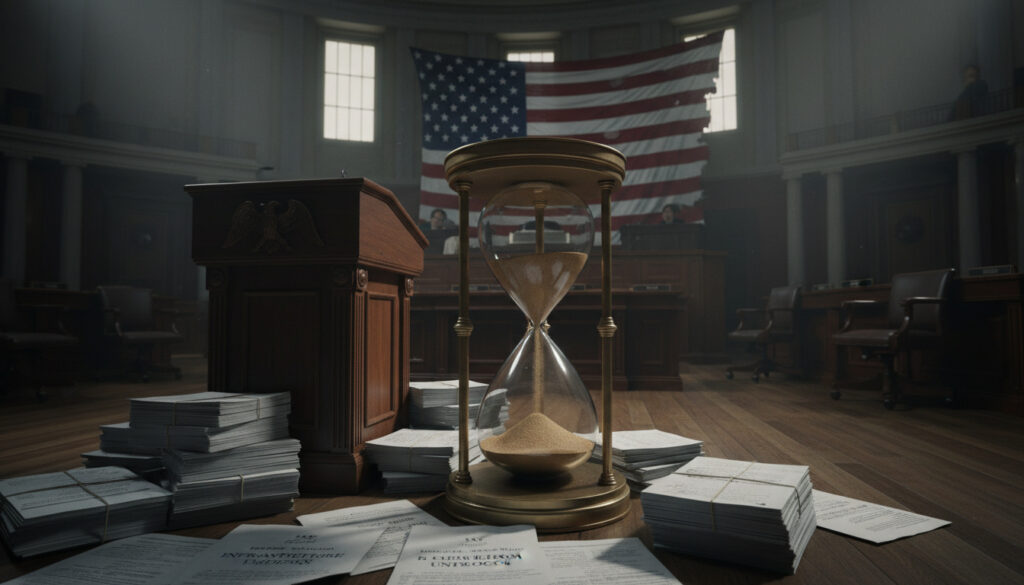
What Is a Filibuster – Senate Rules and History
A filibuster represents one of the most powerful procedural tools in American legislative politics, allowing a single senator or minority faction to delay or block votes on bills through extended debate. Rooted in the Senate’s unique tradition of unlimited discussion, this tactic creates a de facto 60-vote threshold for most legislation, fundamentally altering how laws move through Congress.
Unlike the House of Representatives, which operates under strict time limits and simple majority rules, the Senate permits members to speak indefinitely unless a supermajority intervenes. This distinction has shaped federal lawmaking for nearly two centuries, generating both fierce defense as a protector of minority rights and sharp criticism as an engine of governmental gridlock.
Understanding the filibuster requires examining its accidental origins, its evolution from marathon speeches to silent procedural threats, and the mechanisms designed to overcome it. From Strom Thurmond’s legendary 24-hour stand to modern “two-track” obstruction, the procedure continues to spark debate over the balance between deliberation and democratic action.
What Is a Filibuster?
Prolonged debate to delay or block legislative votes
Emerged accidentally in the early 19th century Senate
No time limits on debate without cloture invocation
Active with reforms; 60-vote threshold standard
- Requires 60 Senate votes to invoke cloture and end debate
- Creates effective minority veto power over most legislation
- Exists only in the Senate; the House prohibits the practice
- Originally required a two-thirds majority (67 votes) to end until 1975
- Shifted from physical endurance speeches to procedural “silent” threats in the 1970s
- Served historically to block civil rights legislation
- Not mentioned in the U.S. Constitution
| Fact | Details |
|---|---|
| Legislative Body | U.S. Senate only |
| First Notable Use | 1850s |
| Modern Rule Established | 1917 (Senate Rule 22) |
| Current Cloture Threshold | 60 votes |
| Original Cloture Threshold | 67 votes (two-thirds) |
| Year Lowered to 60 | 1975 |
| Longest Recorded Filibuster | Strom Thurmond, 24h 24m (1957) |
| Types | Talking and Silent |
| House Equivalent | None prohibited |
| Nuclear Option First Used | 2013 (nominations) |
How Does a Filibuster Work?
The Senate’s unique rules permit any senator to extend debate indefinitely, effectively preventing a final vote on legislation unless opponents gather sufficient support to force closure. This procedural maneuver relies on the absence of general time limits on speeches, a feature distinguishing the upper chamber from the House of Representatives.
When a senator or group seeks to filibuster, they exploit the right to unlimited debate by either speaking continuously or signaling intent to object. The tactic does not require specific content; members may read from phone books, recite recipes, or discuss unrelated topics to consume time, as demonstrated during historical marathon sessions.
The Two Forms of Obstruction
Modern filibusters manifest in two distinct forms. The talking filibuster demands physical presence and continuous speech, with senators holding the floor for hours or days without yielding. This form captured public imagination through dramatic endurance tests, though it has become rare in contemporary practice.
The silent filibuster emerged in the early 1970s through the “two-track” system, allowing senators to merely signal intent to obstruct to the majority leader. This innovation eliminated the need for physical presence while halting legislative progress, making obstruction both easier to initiate and harder to publicly identify.
A successful filibuster requires only 41 senators to maintain opposition, blocking cloture votes that need 60 affirmatives to end debate. This minority veto applies to most legislation, though budget reconciliation and certain nominations follow different rules.
What Is Cloture and How Does It End a Filibuster?
Cloture represents the Senate’s formal mechanism for terminating debate and overcoming filibusters. Established through Rule 22 in 1917 and modified in 1975, this procedure requires a three-fifths majority—60 of 100 senators—to vote for closing discussion and proceeding to a final vote, which itself requires only a simple majority of 51.
The cloture process imposes strict time limits once invoked: debate is capped at 30 additional hours. Senators may still filibuster specific amendments or motions within that window, but the procedure ultimately guarantees an up-or-down vote on the underlying bill, breaking the indefinite delay.
The Nuclear Option
The “nuclear option” offers a controversial method for bypassing the 60-vote threshold through dramatic rules changes. By securing a simple majority vote, the Senate can alter its procedures to eliminate or reduce cloture requirements for specific categories of legislation or nominations.
This tactic earned its name from its potential to permanently alter Senate norms and minority protections. Deployed in 2013 for executive branch nominations (excluding Supreme Court justices) and expanded in 2017 to include Supreme Court nominees, the nuclear option demonstrates how majorities can circumvent traditional filibuster constraints when procedural consensus breaks down.
History of the Filibuster
The filibuster emerged not through deliberate design but through accidental rule changes around 1806, when the Senate eliminated the “previous question” motion that previously allowed majorities to cut off debate. This deletion, intended to streamline procedures, inadvertently created unlimited debate rights that senators gradually exploited over subsequent decades.
Early examples trace to the 1850s, but the tactic remained rare until the twentieth century. President Woodrow Wilson’s frustration with senators blocking World War I merchant ship legislation prompted the 1917 adoption of Rule 22, establishing the original cloture requirement demanding two-thirds of senators present and voting to end debate.
Civil Rights and the Southern Bloc
Between the 1930s and 1960s, Southern Democrats and their allies transformed the filibuster into a systematic tool for blocking civil rights legislation. Unable to muster the two-thirds support needed for cloture, Northern liberals watched as anti-lynching bills and fair employment measures died through extended debate, most notoriously during the 1957 Civil Rights Act fight. For more on this topic, you can explore eines de les millors eines de comprovació de documents.
The Silent Revolution
The 1970s marked a fundamental shift when the Senate adopted the “two-track” system, allowing multiple bills to proceed simultaneously. This innovation enabled silent filibusters, where senators could block legislation without physically holding the floor, dramatically increasing obstruction frequency and turning the Senate into a chamber requiring 60 votes for virtually all major legislation.
From the 1950s through 1960s, filibusters blocked civil rights bills including anti-lynching legislation and voting rights protections, functioning as the primary legislative weapon for maintaining segregation until the 1964 Civil Rights Act finally overcame Southern opposition.
Senate data shows filibusters exploded in frequency after the 1970s adoption of silent obstruction, evolving from rare events affecting major bills like Medicare to routine procedural barriers affecting routine legislation.
Famous Examples of Filibusters
Legendary filibusters have etched themselves into legislative lore, combining theatrical endurance with historic consequence. These marathon speeches rarely succeed in ultimately defeating bills, but they serve as powerful symbols of opposition and occasionally delay legislation long enough to force compromise or public attention.
Senator Strom Thurmond of South Carolina established the endurance record in 1957, speaking for 24 hours and 24 minutes against the Civil Rights Act. Thurmond read election laws, the Declaration of Independence, and even recipes to maintain the floor, breaking previous records while fellow Southern senators assisted by asking lengthy questions to provide brief rest periods.
Popular culture cemented the filibuster’s dramatic potential through Frank Capra’s 1939 film “Mr. Smith Goes to Washington,” where Jimmy Stewart’s character collapses after a 24-hour speech defending democratic ideals against corruption. While stylized, the film accurately captured the physical toll and theatrical nature of talking filibusters.
More recently, on April 1, 2025, Senator Cory Booker of New Jersey spoke for a record duration, though constitutional scholars noted this did not constitute a true filibuster as it did not block a specific vote.
Timeline of Key Filibuster Events
- — Senate accidentally removes “previous question” motion, creating unlimited debate rights
- — First notable filibusters emerge during Senate debates on controversial legislation
- — Senate Rule 22 establishes cloture requiring two-thirds majority (67 votes) amid WWI frustrations
- — Strom Thurmond sets 24-hour filibuster record against Civil Rights Act
- — Cloture threshold reduced to 60 votes; “two-track” system enables silent filibusters
- — Nuclear option deployed for executive nominations (excluding Supreme Court)
- — Nuclear option expanded to include Supreme Court justices
- — Senator Cory Booker delivers record-length speech (non-filibuster)
What Is Certain About Filibuster Procedures?
Established Facts
- Requires 60 votes to invoke cloture
- Exists only in the Senate, not the House
- Originated accidentally in 1806 rule changes
- Silent filibusters replaced talking filibusters in the 1970s
- Not mentioned in the Constitution
- Nuclear option allows simple majority rules changes
Remaining Uncertainties
- Future prospects for complete elimination
- Potential reforms requiring “talking” requirement restoration
- Specific timeline for future nuclear option deployments
- Bipartisan consensus on maintaining 60-vote threshold
Why Does the Filibuster Matter Today?
The filibuster shapes contemporary American governance by forcing supermajority support for most legislation in an era of narrow Senate margins. This procedural reality empowers moderate senators and swing votes while simultaneously frustrating majority agendas, contributing to legislative gridlock on issues ranging from voting rights to immigration reform.
Critics argue the practice has transformed from a rare deliberative tool into a routine obstruction device, allowing minority factions to veto broadly popular legislation. Defenders counter that the 60-vote threshold ensures stability, prevents abrupt policy swings, and protects regional minorities from coastal majorities, maintaining the Senate’s constitutional role as a deliberative body requiring consensus.
The debate intensified during recent administrations as both parties have threatened or deployed the nuclear option, revealing growing frustration with minority obstruction. As of 2025, the rule persists despite ongoing reform movements, with its future tied to shifting Senate majorities and evolving norms regarding deliberation versus decisive action.
Expert Perspectives on Senate Obstruction
Constitutional scholars note the filibuster’s absence from the original constitutional framework, describing it as a procedural evolution rather than a founding principle. Senate historians document its transformation from exceptional tactic to standard operating procedure during the past five decades.
The filibuster forces compromise and bipartisanship in a divided Senate, protecting minority views from majority overreach while preserving the chamber’s deliberative nature.
— Senate procedural historians
The 60-vote rule distorts the simple-majority intent for most laws, enabling obstruction via silent threats and making the Senate less functional.
— Constitutional scholars
Final Thoughts on the Filibuster
The filibuster remains one of the most consequential yet controversial procedures in American democracy, balancing minority protection against majority rule in a chamber designed for deliberation. Its evolution from accidental creation to institutional mainstay reflects broader tensions between efficiency and consensus, between partisan ambition and institutional stability.
Frequently Asked Questions About Filibusters
Why is the filibuster controversial?
Critics argue it allows minority obstruction of popular legislation and creates gridlock, while defenders claim it protects minority rights and forces bipartisan compromise.
Is the filibuster used in the House of Representatives?
No, the House operates under strict time limits and simple majority rules without filibuster procedures, utilizing a Rules Committee to control debate.
Has the filibuster been reformed recently?
The most significant recent changes occurred in 2013 and 2017 via the nuclear option, reducing cloture thresholds for nominations, though 60-vote requirements persist for most legislation.
Can the filibuster be eliminated completely?
Technically yes, through a nuclear option rules change requiring only 51 votes, though this remains politically contested and uncertain.
Does the Constitution mention the filibuster?
No, the filibuster is not mentioned in the Constitution; it emerged through Senate rule changes in 1806 and subsequent procedural evolution.
More related posts
 Giorgio Armani: No Wife, No Kids, But a Succession Plan
 Jobs Hiring Near Me Ireland: Salaries, Quick Jobs & Side Hustles
 2026 Color of the Year – Cloud Dancer Marks Historic First
 Caitlin Clark: Gender, Relationships, and Career Facts
 Cast of Hamilton 2020 Disney+ Cast: Original Broadway Stars
 Mischa Barton Now: Life and Career After The O.C.
 Xelia Mendes-Jones: Identity, Pronouns and Career Facts
 Sara Arjun: Biography, Age, and the Age-Gap Controversy
